Posted Oct. 30, 2012. Here is a good article to share with your doctor about Lyme symptoms and Lyme disease. Specifically it talks about how many people with Lyme never had a rash or remember having a tick bite or even seeing a tick. That was my case. I never saw a tick, never had a rash. Pass it along to your doctor and others to help educate.
Facts About Lyme and Tick-Borne Diseases
Basic Information about Lyme and tick-borne diseases (TBDs):
Lyme and tick-borne diseases are prevalent across the entire United States. Ticks do not know geographic boundaries. A person’s county of residence does not accurately reflect their total TBD risk, since people travel, pets travel, and ticks travel. This creates a dynamic situation with many opportunities for exposure for every individual.
Lyme disease is a clinical diagnosis because there is no definitive diagnostic test yet. Spirochetal infection of multiple organ systems causes a wide range of symptoms. Familiarity with its varied presentations is key to recognizing disseminated Lyme disease. The medical practitioner should be experienced to make a proper clinical diagnosis.
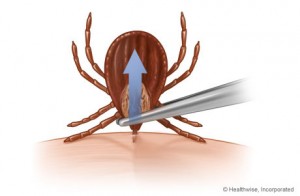
Fewer than half of patients with Lyme disease recall a tick bite. In some studies this number is as low as 15%. So if you never saw a tick on your body, it doesn’t mean you are TBD-free.
Fewer than half of patients with Lyme disease recall any rash. Although the bullseye red rash is considered the classic sign to look for, it is not even the most common dermatologic manifestation of early Lyme infection. Atypical forms of this rash are seen far more commonly. It is important to know that the Erythema Migrans rash is a clear, unequivocal sign of Lyme disease and requires no further verification prior to starting six weeks of antibiotic therapy. Shorter treatment courses have resulted in upwards of a 40% relapse rate.
There has never in the history of this illness been one study that proves even in the simplest way that 30 days of antibiotic treatment cures Lyme or tick-borne diseases. However, there is a plethora of documentation in US and European medical literature demonstrating that short courses of antibiotic treatment fail to eradicate the Lyme spirochete and other tick-borne bacteria.
There is no test currently available to determine whether the bacteria organism is eradicated or the patient is cured.
There are five subspecies of Borrelia burgdorferi, over 100 strains in the US, and 300 strains worldwide. This diversity is thought to contribute to Borrelia burgdorferi’s various antibiotic resistances.
Lyme disease is a “great imitator” and should be considered in the diagnosis of MS, ALS, seizure and other neurological conditions, as well as arthritis, CFS, Gulf War syndrome, ADHD, hypochondriasis, fibromyalgia, somatization disorder, autism, orthostatic hypotension, encephalitis, meningitis and patients with various difficult-to-diagnose multi-system syndromes.
Lyme is the number one tick-borne illness in the US. The CDC reports there are 24,000 new cases of Lyme disease in the US each year, but the CDC also states that past figures may have been underreported by tenfold. ILADS (International Lyme and Associated Diseases Society) believes newly diagnosed cases of Lyme may occur at a rate five times higher than the number of new AIDS cases.
Symptoms of Lyme and tick-borne diseases include:
• Fatigue
• Low grade fevers, “hot flashes” or chills
• Night sweats
• Sore throat
• Swollen glands
• Stiff neck
• Migrating arthralgias, stiffness and frank arthritis
• Myalgia
• Chest pain and palpitations
• Abdominal pain, nausea
• Sleep disturbance
• Poor concentration and memory loss
• Irritability and mood swings
• Depression
• Back pain
• Blurred vision and eye pain
• Jaw pain
• Testicular/pelvic pain
• Tinnitus
• Vertigo
• Cranial nerve disturbance (facial numbness, pain, tingling, palsy or optic neuritis)
• Headaches
• Lightheadedness
• Dizziness
• Mysterious migrating symptoms that seem to come and go
• Cyclical symptoms